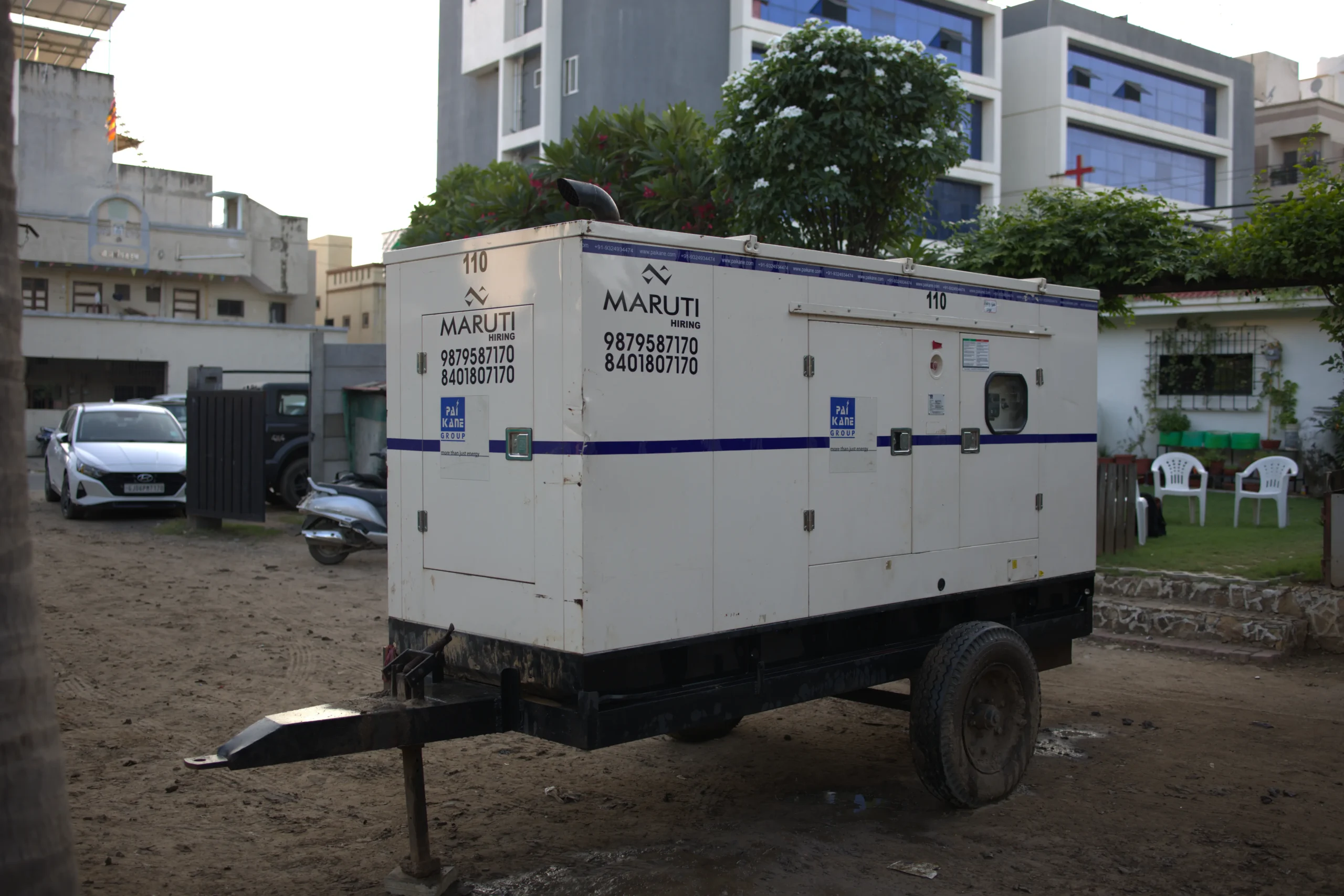
A stable power supply is essential for businesses that depend on machinery, technology, lighting, cooling systems, or other electrical equipment. An unexpected power outage can interrupt production, delay projects, affect customer service, and create unnecessary operational costs.
For businesses that need temporary or backup power, choosing a generator rental in Vadodara can provide a practical alternative to purchasing and maintaining a generator.
However, selecting a diesel generator is not simply about choosing the largest available unit. The generator must match your actual power requirements, operating conditions, rental period, and budget.
In this guide, we explain the key factors businesses should consider before renting a diesel generator in Vadodara.
Why Businesses Choose Diesel Generator Rentals
Purchasing a diesel generator can require a significant upfront investment. Ownership also involves ongoing expenses such as maintenance, servicing, repairs, storage, and equipment management.
Renting gives businesses greater flexibility, particularly when the power requirement is temporary or varies from one project to another.
Some of the main benefits include:
- Reduced upfront investment
- Flexible short-term and long-term rental options
- Access to generators in different KVA capacities
- Maintenance support from the rental provider
- Faster deployment for temporary projects
- Ability to change generator capacity as requirements evolve
For construction companies, factories, event organisers, offices, and commercial facilities, generator rental can therefore be a convenient way to maintain dependable power without the responsibilities associated with equipment ownership.
Start by Understanding Your Power Load
Before selecting a generator, determine how much electrical load your site actually requires.
Diesel generator capacity is generally specified in KVA (kilovolt-amperes). Choosing the appropriate KVA rating is important because both undersizing and oversizing can create problems.
An undersized generator may struggle to handle the connected equipment, while an unnecessarily large generator may increase rental and fuel costs.
Typical Generator Capacities
Generator Capacity | Common Uses |
15–25 KVA | Small offices, shops, cabins and temporary workspaces |
30–62.5 KVA | Workshops, small events and commercial operations |
82.5–125 KVA | Construction sites and medium-scale industrial requirements |
160–250 KVA | Manufacturing plants and larger commercial facilities |
320 KVA+ | Factories, infrastructure projects and large events |
These ranges provide a general reference. The actual capacity required depends on the equipment being operated and its electrical characteristics.
Calculate Running and Starting Loads
A proper load assessment is one of the most important steps when arranging a diesel generator rental in Vadodara.
Begin by identifying every piece of equipment that may operate from the generator, including machinery, lighting, air-conditioning systems, computers, pumps, compressors, and other electrical devices.
Determine the Running Load
Calculate the combined power requirement of equipment that will operate at the same time. This provides an estimate of the normal running load.
Consider Startup Demand
Equipment containing electric motors can require considerably more power when starting than during normal operation. Pumps, compressors, HVAC systems, and industrial machinery are common examples.
Ignoring this startup demand can result in voltage drops, generator overload, or operational interruptions.
Maintain Reserve Capacity
It is generally useful to maintain additional capacity rather than operating a generator continuously at its maximum rating.
A suitable reserve also gives your business flexibility if additional equipment needs to be connected later.
For complex industrial loads, a professional site assessment is preferable to relying solely on basic wattage calculations.
Match the Generator to Your Business Application
Different operating environments place different demands on diesel generators. Understanding where and how the equipment will be used can help narrow down the appropriate configuration.
Construction and Infrastructure Projects
Construction sites often have changing power requirements throughout different phases of a project.
Generators may be required for welding equipment, pumps, lighting towers, tools, temporary offices, and other site equipment.
For these environments, businesses should consider generator durability, runtime requirements, accessibility for refuelling, and the ability to handle changing loads.
Industrial and Manufacturing Operations
Production facilities often rely on continuous electrical power to keep machinery and critical systems operational.
When renting a generator for industrial applications, businesses should carefully evaluate load characteristics, operating hours, backup requirements, and the consequences of downtime.
A correctly selected generator can support essential processes during planned maintenance, grid interruptions, or temporary increases in power demand.
Offices and Commercial Properties
Commercial buildings may need backup electricity for computers, networking equipment, lighting, air conditioning, security systems, and other essential infrastructure.
The priority is usually to maintain critical business functions without renting more capacity than necessary.
Events and Temporary Functions
Weddings, exhibitions, corporate events, concerts, and outdoor functions can have significant temporary power requirements.
Sound systems, decorative lighting, LED screens, catering equipment, cooling systems, and stage equipment may all operate simultaneously.
Planning the load in advance can reduce the risk of interruptions during the event.
Decide Between Short-Term and Long-Term Rental
Rental duration has a direct impact on cost and equipment planning.
A short-term rental may be appropriate for events, emergency requirements, temporary installations, shutdown periods, or short construction activities.
Long-term rental arrangements may be more suitable for ongoing construction projects, industrial facilities, infrastructure work, and businesses that require backup power over several months.
Before confirming a rental, businesses should clearly define the expected operating period and discuss whether the rental terms can be extended if the project timeline changes.
Evaluate Fuel Consumption, Not Just Rental Price
The lowest rental quotation does not necessarily represent the lowest overall operating cost.
Diesel consumption can become a major expense when a generator operates for extended periods. Fuel usage depends on several factors, including:
- Generator capacity
- Percentage of load
- Daily operating hours
- Equipment condition
- Engine efficiency
A correctly sized and well-maintained generator can help improve operating efficiency.
When comparing rental options, consider the estimated total cost of operation rather than making a decision based only on the daily or monthly rental rate.
Check Generator Condition and Maintenance Standards
Equipment reliability is particularly important when the generator supports critical business operations.
Before accepting a rental generator, ask about its service history, maintenance schedule, inspection procedures, and testing process.
Well-maintained equipment is less likely to experience unexpected breakdowns and can provide more consistent performance throughout the rental period.
It is also useful to confirm who is responsible for scheduled servicing during longer rental arrangements.
Look for Reliable Technical and Breakdown Support
Generator rental is not only about supplying equipment. The quality of service available after installation can be equally important.
A dependable rental provider should be able to assist with areas such as:
- Generator selection and load assessment
- Transportation and site delivery
- Installation and commissioning
- Routine servicing
- Technical troubleshooting
- Breakdown assistance
- Replacement arrangements when necessary
Fast technical support can be particularly valuable for manufacturing plants, construction projects, and events where extended downtime can have significant consequences.
Consider Site Conditions Before Installation
The installation location should also be assessed before the generator arrives.
Important considerations include adequate ventilation, safe equipment clearance, cable routing, access for maintenance and refuelling, noise requirements, and protection from unsuitable environmental conditions.
For larger generators, delivery access and available installation space should be confirmed in advance.
Discussing these requirements with the rental provider can help prevent delays on the day of installation.
Benefits of Choosing a Local Generator Rental Provider in Vadodara
Working with a local supplier can simplify generator deployment and ongoing support.
A provider familiar with Vadodara and nearby industrial areas can better coordinate equipment delivery, installation, servicing, and emergency assistance.
Local support can be particularly valuable when businesses require a generator urgently or need technical assistance during ongoing operations.
Generator Rental Solutions from Maruti Hiring
Businesses searching for generator rental in Vadodara need equipment that matches their actual operational requirements rather than a one-size-fits-all solution.
Maruti Hiring provides diesel generator rental solutions for a range of commercial, industrial, construction, and temporary power applications.
Depending on project requirements, businesses can select generators across different KVA capacities and arrange rental periods suited to short-term or extended operations.
By assessing factors such as required load, operating hours, site conditions, and application type, businesses can identify a generator configuration that delivers reliable power without unnecessary capacity or expense.
Questions to Ask Before Renting a Diesel Generator
Before finalising your generator rental, consider asking the provider:
- What KVA capacity is suitable for my calculated load?
- Can the generator safely handle motor startup loads?
- What is the expected diesel consumption at my operating load?
- Is transportation included in the rental arrangement?
- Who handles installation and commissioning?
- How is routine maintenance managed?
- What breakdown support is available?
- Can the rental period be extended if required?
- Is replacement equipment available in case of a major fault?
Getting clear answers to these questions can make it easier to compare rental options and avoid unexpected costs.
Conclusion
Choosing the right diesel generator requires careful consideration of capacity, equipment load, operating hours, fuel consumption, site conditions, rental duration, and technical support.
Instead of simply selecting a generator based on price or KVA rating, businesses should evaluate their complete power requirement and choose equipment suited to their specific application.
If you are searching for a reliable generator rental in Vadodara, Maruti Hiring can assist with selecting an appropriate diesel generator for your commercial, industrial, construction, or temporary power requirements. The right rental solution can help minimise downtime, control operating costs, and keep essential operations running when dependable power is needed most.