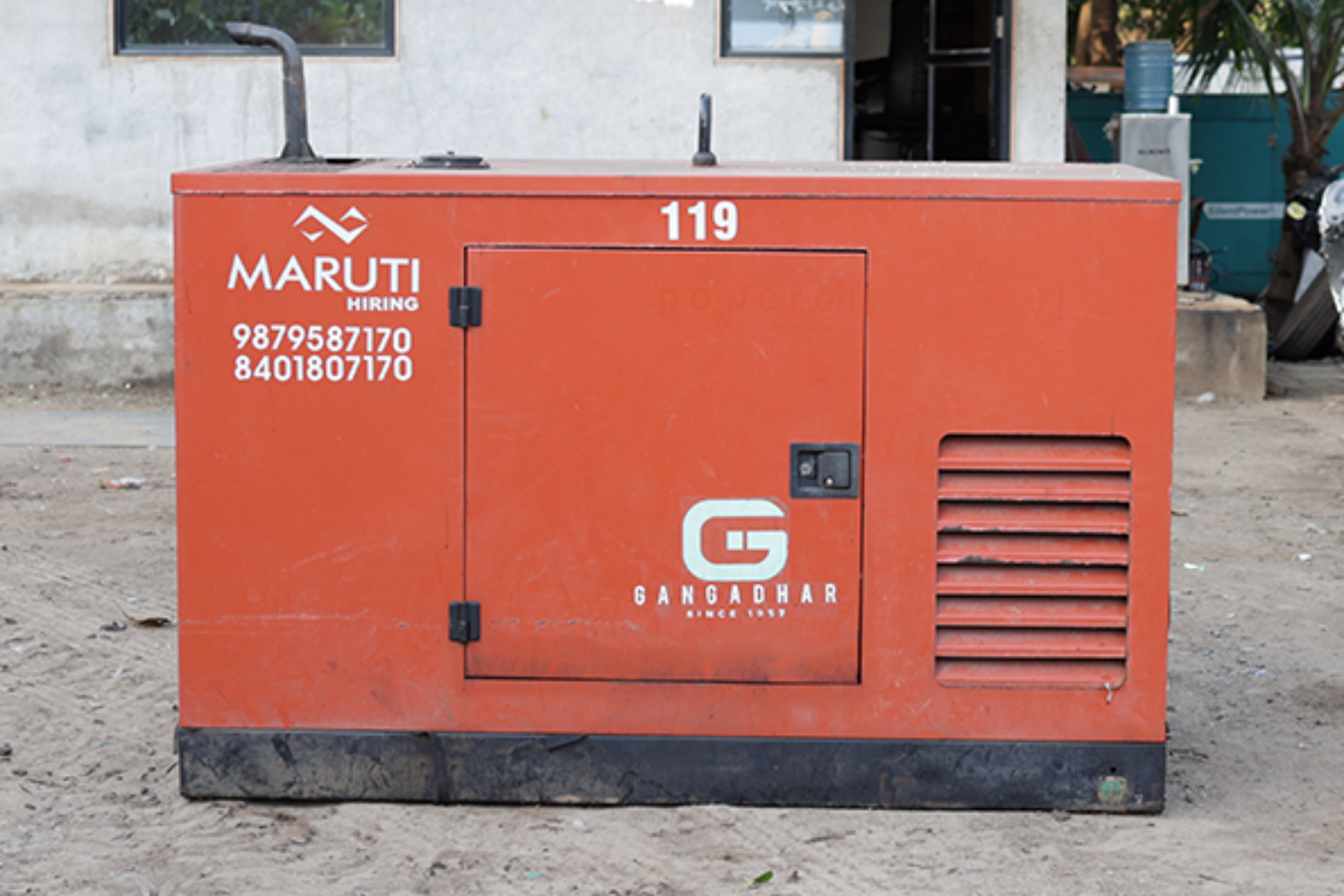
Reliable backup power plays an important role in keeping businesses operational when the primary electricity supply is interrupted. For manufacturing units, construction projects, commercial facilities, healthcare organisations, and events, even a short power disruption can affect productivity, schedules, and revenue.
For businesses across Gujarat, one important decision is whether to purchase a diesel generator or choose a diesel generator on rent in Gujarat.
Generator ownership can make sense for businesses with stable, long-term requirements. However, renting can offer greater flexibility for companies that need temporary power, additional capacity, or a quick backup solution.
The right choice depends on how frequently you need the generator, your available capital, expected operating period, and the level of technical support required.
Generator Rental and Purchase: What Is the Difference?
Before comparing costs, it is important to understand how each option works.
Purchasing a Diesel Generator
When you purchase a generator, the equipment becomes a business asset. You have complete control over its operation and availability, but you are also responsible for maintenance, repairs, fuel management, storage, and eventual replacement.
Ownership can be beneficial when the generator is expected to be used regularly over a long period.
Renting a Diesel Generator
With a rental arrangement, you use a generator for an agreed period without purchasing the equipment.
Depending on the rental provider and agreement, services may include transportation, installation, servicing, technical assistance, and breakdown support.
This makes diesel generator rental in Gujarat particularly useful for temporary projects, emergency requirements, shutdowns, and businesses that need additional power capacity without making a major capital investment.
Comparing the Costs of Renting and Buying
Cost is often the first consideration when deciding between rental and ownership. However, businesses should look beyond the initial price.
Upfront Capital Requirements
Purchasing a generator requires a substantial initial investment. In addition to the generator itself, businesses may need to budget for installation, cabling, infrastructure, transportation, and other setup requirements.
Rental generally requires a much smaller initial financial commitment.
This can help businesses preserve working capital for areas such as:
- Business expansion
- New equipment
- Employee costs
- Inventory
- Project expenses
- Other operational requirements
For businesses with temporary power needs, avoiding a large capital expenditure can be a significant advantage.
Maintenance and Repair Costs
Generator ownership comes with ongoing maintenance responsibilities.
An owner may need to arrange:
- Preventive servicing
- Engine maintenance
- Oil and filter replacement
- Battery maintenance
- Electrical inspections
- Spare parts
- Unexpected repairs
- Technician support
These expenses can add considerably to the overall cost of ownership over several years.
With a rental arrangement, maintenance and technical support are often managed by the rental provider according to the terms of the agreement.
This allows businesses to focus on their core operations rather than managing another piece of equipment.
Flexibility Is a Major Advantage of Generator Rental
Business power requirements are not always constant.
A construction project may require one generator during the initial phase and a larger capacity as additional machinery is introduced. Similarly, an industrial facility may require temporary backup during planned maintenance.
Rental allows businesses to select equipment according to their current requirement.
Rental can provide the flexibility to:
- Choose different KVA capacities
- Rent equipment for specific projects
- Extend the rental period when necessary
- Increase capacity as demand grows
- Reduce capacity when requirements change
- Arrange emergency backup power
This flexibility is difficult to achieve with a single purchased generator.
Generator Capacity Can Change With Your Requirements
Selecting the right capacity is critical for efficient generator operation.
For example, a business may initially require a 100 KVA generator but later need significantly more capacity because of additional machinery or increased production.
With rental, the business can potentially replace the existing unit with a higher-capacity generator instead of purchasing another generator.
This makes rental particularly useful for businesses with fluctuating or project-dependent electrical loads.
Emergency Power Requirements
Power interruptions do not always happen at convenient times.
Unexpected outages, equipment failures, maintenance work, and infrastructure issues can create an immediate need for backup electricity.
A professional rental provider may be able to arrange equipment delivery, installation, and technical assistance according to the urgency of the requirement.
For businesses where downtime has serious consequences, having access to a reliable rental network can provide an additional layer of operational security.
With an owned generator, the business must ensure that its own equipment is available, maintained, fuelled, and ready to operate when an outage occurs.
Which Gujarat Businesses Can Benefit From Generator Rental?
Different industries can benefit from rental depending on their operating model.
Construction and Infrastructure
Construction projects typically have a defined timeline and changing power requirements.
Generators may be needed for:
- Welding equipment
- Concrete mixers
- Pumps
- Site offices
- Lighting
- Power tools
- Temporary installations
Renting allows contractors to match generator capacity to each stage of the project without purchasing equipment that may have limited use after completion.
Manufacturing and Industrial Facilities
Factories may require additional power during production expansion, planned maintenance, equipment installation, or temporary electrical infrastructure work.
A rental generator can provide additional capacity without requiring the company to permanently invest in another generator.
Events and Temporary Functions
Events usually have short-term power requirements.
Purchasing a generator solely for occasional events may not be financially practical for organisers, venues, or businesses.
Rental provides access to suitable capacity for the duration of the event without the responsibilities of long-term ownership.
Commercial Buildings and Offices
Offices, retail facilities, warehouses, and commercial buildings may require backup electricity for essential systems such as lighting, IT infrastructure, security systems, HVAC equipment, and other critical operations.
Rental can be particularly useful when backup power is required temporarily or during building upgrades and electrical maintenance.
When Buying a Generator May Be the Better Choice
Generator rental is not always the best solution.
Purchasing may make sense when a business:
- Requires backup power regularly for many years
- Operates the generator at consistently high utilisation
- Has sufficient capital available
- Has trained technical personnel
- Can manage maintenance and repairs
- Has appropriate space for generator installation
- Wants to retain the equipment as a long-term asset
For businesses with predictable, continuous generator requirements, ownership can potentially offer better economics over a long period.
However, the calculation should include the full cost of ownership rather than just the purchase price.
The Hidden Costs of Generator Ownership
A generator’s purchase price represents only part of its lifetime cost.
Businesses should also consider:
- Installation expenses
- Scheduled servicing
- Replacement parts
- Battery replacement
- Repairs
- Operator costs
- Storage requirements
- Depreciation
- Insurance where applicable
- Equipment downtime
- Eventual replacement
When these factors are included, rental can become more attractive for businesses with temporary or variable requirements.
What to Check Before Renting a Generator
Before choosing a rental provider, businesses should evaluate more than the quoted rental price.
Ask about:
Generator Capacity
Confirm that the available KVA rating can handle both running and starting loads.
Equipment Condition
Ask whether the generator is regularly inspected, serviced, and tested before deployment.
Installation
Confirm whether transportation, cabling, installation, and commissioning are included.
Technical Support
Understand how breakdowns and technical issues are handled during the rental period.
Rental Duration
Check whether the contract can be extended if the project takes longer than expected.
Replacement Support
Ask what happens if the generator develops a major fault during operation.
Fuel Requirements
Clarify fuel responsibilities and understand expected consumption based on your operating load.
Rental vs Purchase: At-a-Glance Comparison
Factor | Diesel Generator Rental | Generator Purchase |
Initial investment | Lower | Higher |
Maintenance responsibility | Usually provider-managed | Owner-managed |
Rental flexibility | High | Limited |
Capacity changes | Easier | Requires additional investment |
Long-term ownership | No | Yes |
Technical support | Often available through provider | Arranged by owner |
Temporary projects | Highly suitable | Often less practical |
Asset value | No ownership asset | Becomes a business asset |
Scalability | Easier | More difficult |
Capital commitment | Lower | Higher |
How to Decide Between Rental and Purchase
A simple way to approach the decision is to consider three questions:
- How long will you need the generator?
If the requirement is for a few days, weeks, or months, rental is often more practical.
- How frequently will the generator operate?
Businesses with occasional or emergency requirements may benefit from rental, while businesses with consistently high utilisation may consider ownership.
- Do you have the resources to maintain the equipment?
If you do not want to manage servicing, repairs, technical staff, and equipment maintenance, rental can reduce that operational responsibility.
Why Consider Maruti Hiring for Generator Rental in Gujarat?
For businesses searching for a diesel generator on rent in Gujarat, choosing the right equipment and service provider is just as important as deciding between rental and ownership.
Maruti Hiring provides diesel generator rental solutions for commercial, industrial, construction, infrastructure, and event applications.
With generator capacities ranging from 10 KVA to 2500 KVA, businesses can select equipment according to their specific power requirements. Rental solutions can be arranged for temporary projects, emergency requirements, planned maintenance, or longer-term operational needs.
Support such as installation assistance, technical service, and equipment management can further simplify the rental process.
Conclusion
The decision between purchasing and renting a diesel generator depends largely on your business’s power requirements, utilisation, budget, and expected rental period.
Purchasing can be suitable for businesses that need a generator consistently over many years and have the resources to manage ownership. For temporary projects, fluctuating requirements, emergency backup, and businesses looking to minimise capital expenditure, diesel generator rental in Gujarat can provide a more flexible alternative.
Before making a decision, consider the complete cost of ownership, maintenance requirements, fuel consumption, technical support, generator capacity, and how your power needs may change over time.
For businesses across Gujarat looking for flexible and dependable backup power, Maruti Hiring can provide generator rental solutions designed around different project and operational requirements.